Pilgrims on Christ’s Mission

English

English

The Gift of Self

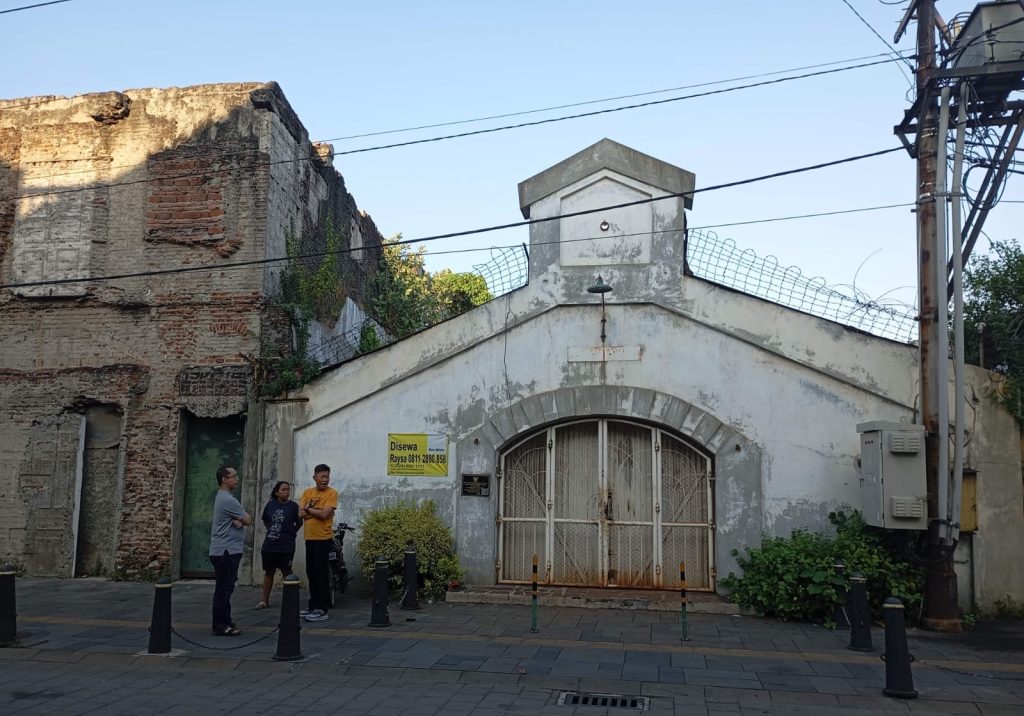
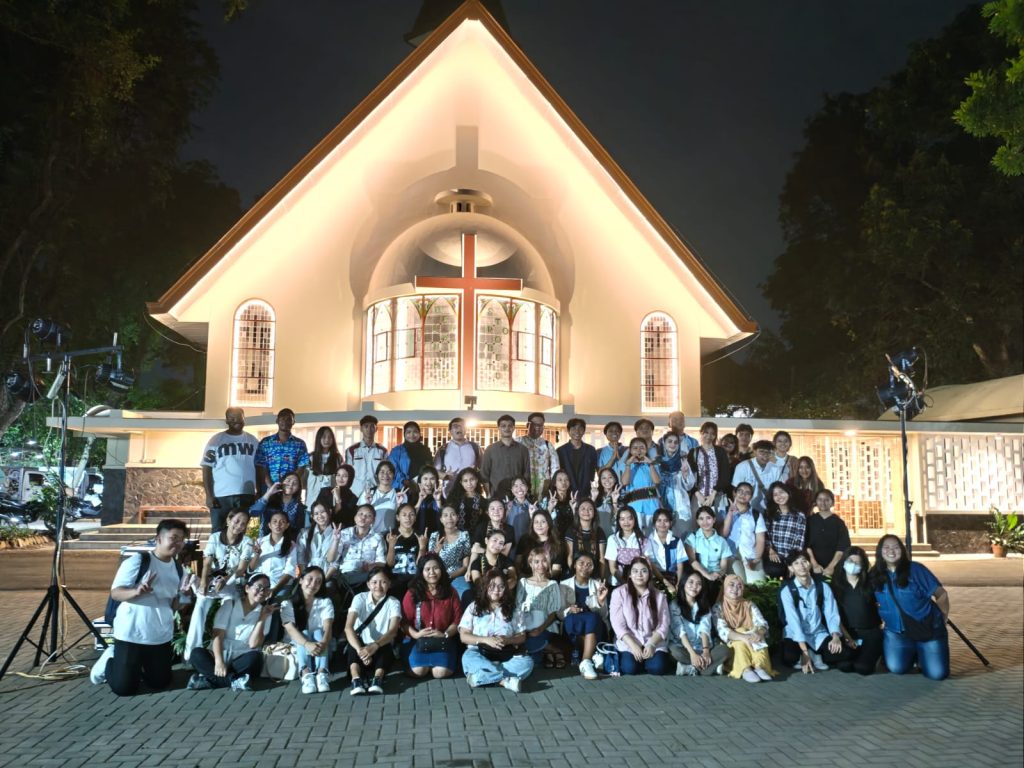
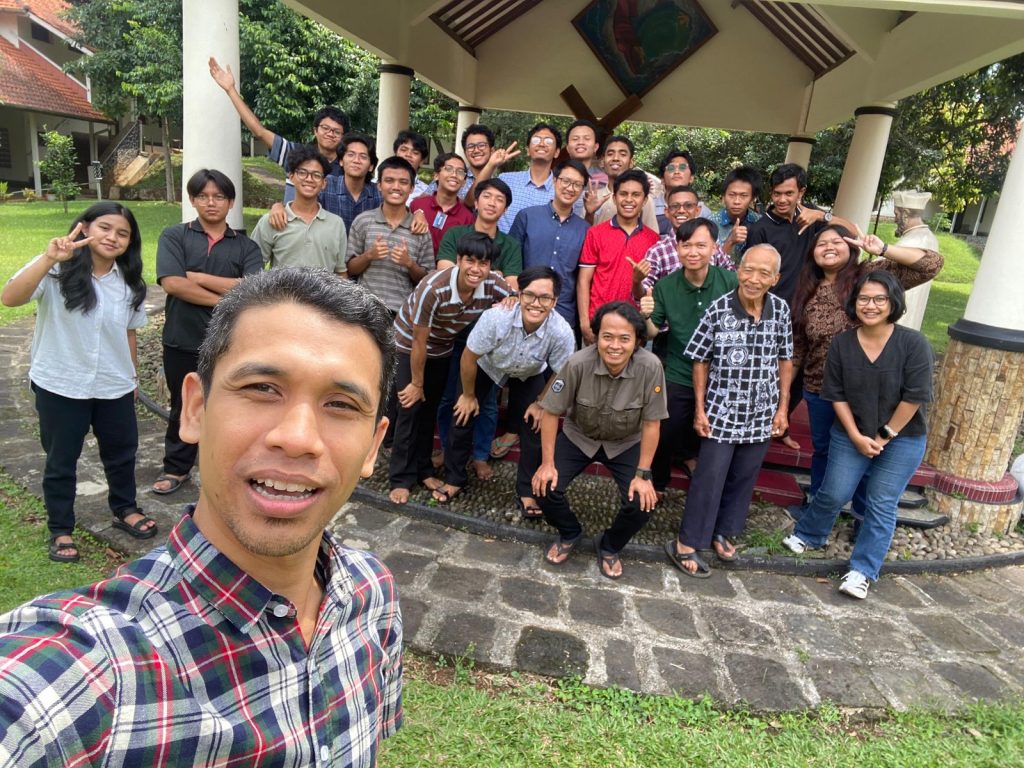
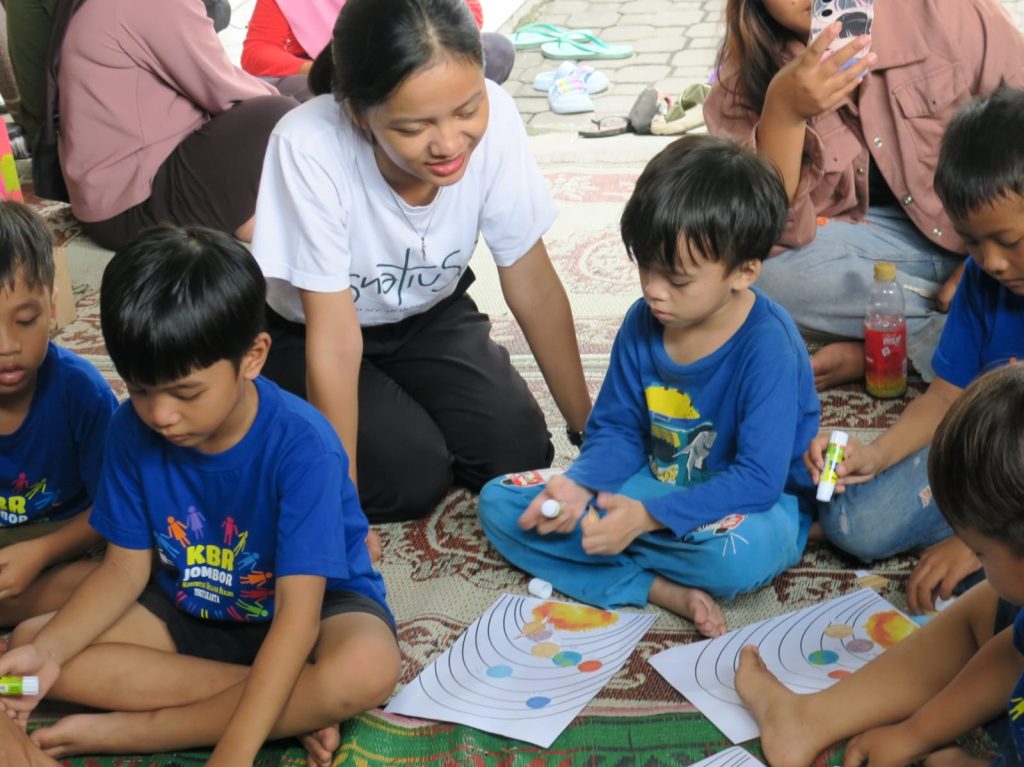
The Tapestry of Gratitude: For three years, I have lived in Yogyakarta, experiencing many meetings and farewells. I’ve had extraordinary experiences that not everyone gets to have. I believe God designed all of this for me to appreciate as blessings in my life journey. From my first steps in Yogyakarta to finding a warm-hearted community, I felt everything was prepared for me.   My journey began when I started attending a private Jesuit university. I had many worries about making friends and developing relationships with others. Can I connect with people, or would I remain closed off? My fears started to fade when I volunteered with the Realino Community.   On February 14, 2023, I first entered the historic building located at Jalan Mataram No. 66, Yogyakarta. I vividly remember the atmosphere. It was hot outside, but I was greeted warmly by the smiles of the Realino community. This experience was my first interaction with Realino, and I noted the presence of Polo, a friendly dog that welcomed every volunteer. Despite my fears, I bravely explored this new place.   Soon, I was not alone; I joined friends in the Realino Community. Together, we interacted with children and residents in Bongsuwung and Jombor. We explored the narrow and winding streets of Yogyakarta and Central Java for educational scholarship surveys and occasionally indulged in Yogyakarta’s delightful culinary offerings.   Bongsuwung and Jombor hold a special place in my heart. Although I can no longer visit Bongsuwung due to displacement, both communities have taught me many valuable lessons. As Realino volunteers, we were always welcomed by the children and locals, whose lively stories and experiences brought joy. Their antics sometimes made me laugh or shake my head in disbelief, yet I eagerly looked forward to weekly visits.   A friend asked why we teach non-formal education to these children on weekends when they already learn in school. I paused and found my answer when a spirited child shared their daily life with us. While they may receive lessons at school, our approach offers something different. We bring not just education but also companionship and listening.   Another memorable experience as a Realino volunteer was home visits during scholarship surveys. I enjoyed meeting new people and hearing their stories, each family with their unique struggles. I felt grateful to be a small part of their journey. Sharing the survey moments with fellow volunteers deepened our understanding of presence and the importance of listening to those in need.   Lastly, my unexpected rise to coordinator for the Realino Community has been transformative. At just seventeen years old, I never imagined I’d take on this role, managing volunteers and social media while helping organize events in Bongsuwung and Jombor. This experience taught me to make choices confidently. A friend once said, “Nares is spreading her wings.” Through my experiences at Realino, my initial struggles found resolution, leading me to study in Yogyakarta without financial burden and to serve as an expression of gratitude.     I have come to realize that Realino is truly a home to return to. I am now more affirmed and grateful for my journey. As one song lyric goes, “You can call it home, as long as those you love are inside. ” Thank you, Realino, for the extraordinary experiences and the people I will always cherish.   AMDG.   Contribution: Aurelia Pradhita Nareswari Pangarso – volunteer Realino of 2023/2024
English

Guiding Yet Guided

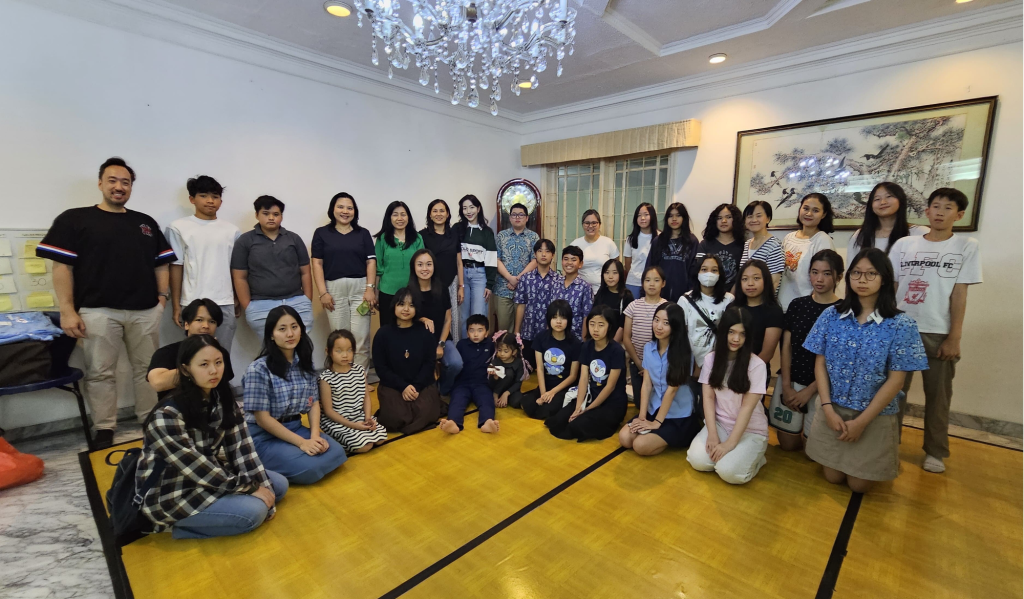
Hello! We are Mother Mary’s Kids (MMK). We began in 2012 as a small Bible study group for our neighborhood children, and by God’s grace, we’ve grown into a ministry with Bible studies, choir, and sacrament preparation for kids and teens. We serve under Blok B Parish of the Jakarta Archdiocese, welcoming both Indonesian and international kids, mostly from non-denominational English-speaking national plus or international schools.   Our journey with Ignatian spirituality started when our parish priest, Father Aluisius Pramudya Daniswara, S.J. (Father Pram), “forced” (his word, not ours!) us to try the practice of Spiritual Conversation during one of our annual retreats. At the time, we thought it would be just another program. Instead, it became the seed of a transformation for us as catechists and, later, for the children we accompany.   As catechists, we set aside one day each year to retreat together. It is our time to recharge, to rest from lesson plans and crafts, and simply to be in community. Usually, the day is quiet, centered on listening to God’s Word through Father’s reflections. But that year, he invited us into something different: spiritual conversation, where we listened deeply, shared freely and safely, and let the Spirit guide what happened between us.   At first, it felt unusual. Yet it worked. We left not only refreshed but also more connected. We shared our hopes and struggles, not only as fellow catechists but also as friends on the same mission. Since then, we have returned to the practice many times. In fact, during our most recent 12-week formation for new catechists, we concluded with a spiritual conversation, where each participant shared their surprises, fears, and hopes as they began their ministry. The fruit was unmistakable: a sense of fraternity, of meeting one another in authenticity beyond roles or functions. We began to see each other not merely as “fellow catechists” but as companions on the journey.   Of course, once we told Father Pram about the fruits we experienced, he “forced” us again, this time into the practice of the Examen. As laypeople serving in a Jesuit parish, we thought we knew the Examen. For years, we had taught children to pray in three simple steps: one thing to thank God for, one thing to say sorry for, and one thing to hope for. We thought, “Check! We’ve got this!” But Father reminded us prayer is more than words; it is the lifting of heart and soul to God. He gently but firmly asked us not only to practice the Examen ourselves, daily and in writing, but also to bring it into our sessions with the kids. “Through this,” he insisted, “you and the children will come to know yourselves more deeply.”   Honestly, we dragged our feet. With lesson plans, jobs, and sacrament prep on our plates, this felt like one more thing. But in true Jesuit spirit, we obeyed. We began with our Confirmation candidates, asking them to pray the Examen nightly and write it out in a journal. At first, we didn’t comment much; we simply checked that it was done. After three weeks, we scheduled one-on-one pastoral conversations with each candidate. We weren’t sure what to expect, but what unfolded left us stunned.     I will never forget one boy in particular, a 13-year-old who had faithfully written his examen every night. His notebook was thick with reflections. I asked him to look at it like a detective: “What patterns do you see? What do you usually thank God for, what do you say sorry for, and what do you ask help with?” He flipped through the pages, then looked up and admitted quietly, “I tend to swear a lot.” He pointed to several entries where he had written it down. I asked gently, “Why do you think you do that? Is swearing really the best way to express yourself?” He thought for a long while before answering, “Because that’s what my friends do. It feels normal around them. But deep down I know it’s not right.” We sat in silence. Then I asked, “If you could give advice to yourself, what would it be?” He paused, longer this time, and finally said words that struck me to the core: “Don’t do what’s normal!”   In that moment, the Spirit broke through: clear, simple, and powerful. Through the Examen, this boy had discovered not only a personal weakness but also the courage to resist conformity. It was discernment in action, born not from a lecture but from his own prayer. I was so moved I nearly wept.   Other conversations were just as moving. A 14-year-old boy confessed that he felt stuck in routines, empty, and distant from God. A teenage girl shared how the Examen had helped her notice and rejoice in the small, ordinary blessings of her day. Another spoke candidly about the frustration of endless pressure to excel in school. And one brave girl, with tears in her eyes, asked the question weighing on her heart: “Is my late grandma saved?” There were smiles, laughter, and yes, tears. We had never seen such honesty in past programs.   We were unprepared for the emotions that surfaced, but it was a holy kind of overwhelm. After 13 years of serving MMK, we have come to understand more deeply that being a catechist means not only teaching doctrine but also accompanying as a friend and companion on the journey. That is the true gift of Spiritual Conversation and the Examen.   That very night, we called Father Pram to share our joy and amazement. We are no experts in Ignatian spirituality, but we are witnesses to its fruits. And if you are a catechist reading this, we want to encourage you: let yourself be “forced” into these practices too. Try Spiritual Conversation. Practice the Examen. Even when it feels awkward, even when it feels like extra work.   Because the Spirit works in those moments. And sometimes, the most profound wisdom comes

English

The Discerning Pope

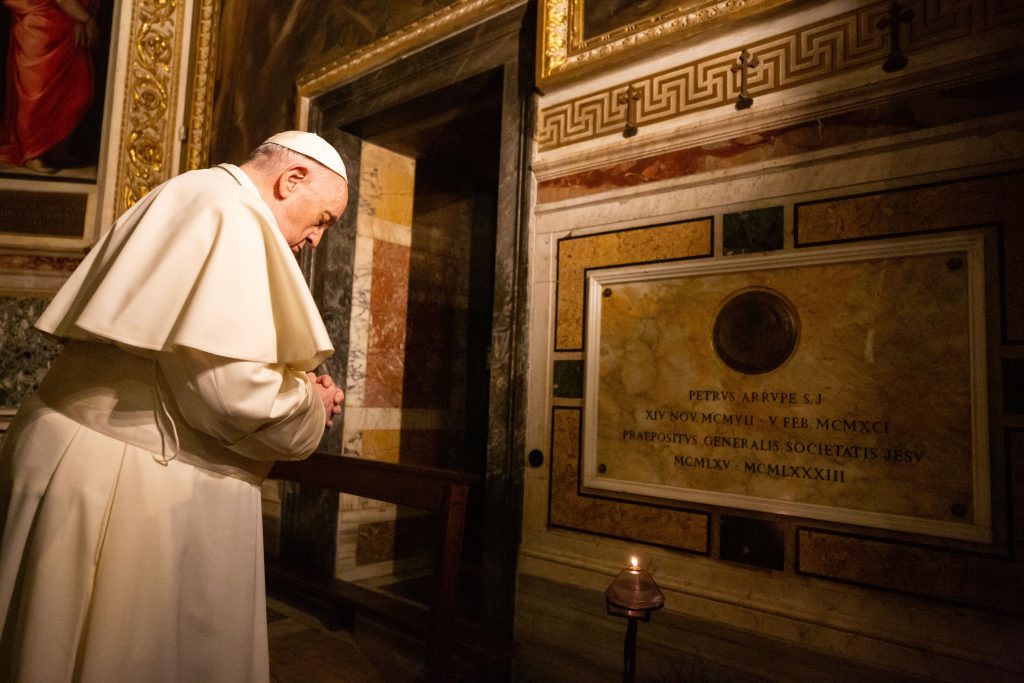
JESUIT VALUES OF JORGE MARIO BERGOGLIO (part 2): Spiritual Exercises Fr. General celebrated the Eucharist with Jesuits in Rome to pray for Pope Francis. In his homily, he noted that Pope Francis embodies the Spiritual Exercises of St. Ignatius of Loyola, which influence his unique style of life and service to God and humanity. The Spiritual Exercises foster strong faith and emphasize dialogue to cultivate authentic relationships, resolve conflicts, and promote reconciliation, with “Principle and Foundation” as a key component.   The life of Pope Francis is rooted in Jesus Christ, providing a strong foundation. He acknowledges his vulnerabilities, which are integral to the first week of the Spiritual Exercises. In contrast, the second week begins with the King’s Call, which focuses on the Incarnation and the Birth of Jesus. Father Arturo Sosa noted that this contemplation enables the Pope to understand the world’s work of redemption. It gives him a universal perspective, enabling him to connect deeply with people from diverse backgrounds, including children and the elderly.   In the second week, the meditation on the “Two Standards” inspires Pope Francis to align himself with Jesus, who epitomizes poverty and humility.   Petrus Faber Santiago Madrigal, a Spanish Jesuit, writes about St. Peter Faber as a mystical model of holiness in his article. Pope Francis canonized St. Peter Faber on December 17, 2013. Faber’s spiritual inspiration and mystical journey can be found in his personal writings, specifically in “Memoriale. ” Pope Francis draws from Faber’s example, emphasizing that true renewal comes from profound spiritual experiences. This idea aligns with St. Ignatius’ acknowledgment of Faber as the best guide for the Spiritual Exercises.   Historically, when St. Ignatius left Paris for Azpeitia, Faber helped recruit three new members, adding to the original group of six friends, who were later called the “nine companions” in their mission. From St. Ignatius, Faber learned always to seek God and live according to God’s path. This dedication is also reflected in Pope Francis’s pastoral work, discernment, and prayer, earning him the title “the Discerning Pope.”   Rome, Sunday, June 8, 2025 Pentecost   Leo Agung Sardi, S.J.   Contributor: P. L. A. Sardi, S.J. 

English

Journeying Through the Paths and History of Gedangan

Amazing Race: Hi, I am Lusia, a member of Gedangan Catholic Youth. You may remember that in the previous edition, I wrote about Gedangan Church. This time, I am back with a different story, although it is still from the same place. I hope you have not forgotten my story as the guide for the Exploring Gedangan event on Internos last August.   I want to share my experiences related to the 150th anniversary celebration of Gedangan Church. I, along with other friends, parish council members, and priests, prepared for an event called the Amazing Race, which aimed to promote health and commemorate the church’s history. This event combines exercise, historical awareness, and community bonding. I am involved in organizing the event, which includes creating challenges and a guidebook for participants.   Participants would walk along different routes with various stops featuring games connected to the church’s history. This interactive approach allows everyone, whether organizers or attendees, to experience the history personally. The activities include solving riddles in Morse code, understanding historical facts, completing crossword puzzles about the church’s journey, assembling puzzles featuring old photographs of the church, and identifying figures from the community’s past.   As the preparations came together, enthusiasm grew among participants, with teams creating cheers and selecting outfits for the day. The atmosphere anticipated a lively gathering, filled with laughter and teamwork, marking not just a healthy outing but also a celebration of unity among the church community.   However, plans faced a setback due to rising tensions in Indonesia, with large demonstrations impacting public events and security concerns. As a result, the Amazing Race had to be postponed, disappointing many participants who had diligently prepared for the event. Though I acknowledge the disappointment, I emphasize that safety must take precedence over celebrations. I reflect on the importance of this event as a symbol of spiritual journey and community connection, despite the delay.   I find comfort in knowing that the event can still take place in the future and that its essence remains intact. The church’s history will live on through the faithful participation of its members. While this pause may be due to circumstances beyond control, it serves as a moment to prepare spirits and hearts for future gatherings. The spirit of the Ignatian philosophy reminds everyone to seek God in all things, including the challenges of missed opportunities.     Contributor: Lusia Pamungkas – Gedangan Muda

English

Beyond Technology, Embracing Meaning

Bellarminus Day 2025: On September 17, 2025, the academic community of Sanata Dharma University (USD) celebrated Bellarminus Day 2025 at the Chapel of St. Robertus Bellarminus. This year’s celebration was especially significant due to the completion of the chapel’s renovation, which enhanced its beauty and made it more suitable for prayer and worship. The event included a lively Eucharistic celebration, during which the statue of St. Robert Bellarmine was blessed, symbolizing love for truth and dedication to the Church and society. The Mass was presided over by the Rector of USD, Father A. Bagus Laksana S.J., alongside nine Jesuits from the Bellarminus Community. In his homily, Father Bagus compared two Italian saints from different eras, St. Carlo Acutis and St. Robert Bellarmine. Despite their different time periods, both saints responded to God’s call and made significant contributions to society, despite facing challenges related to faith and science. Father Bagus encouraged the academic community to emulate these saints by being creative and wise, particularly in utilizing technology such as Artificial Intelligence (AI).   Inspirational speeches were given by the Chairperson of the Management Board of Sanata Dharma Foundation, Father C. Kuntoro Adi, S.J., who expressed hopes for the renovated chapel to be a welcoming space for people and God, and by Father G. Budi Subanar, S.J., speaking on behalf of the Apostolic Community of Kolese Santo Robertus Bellarminus, who shared the history of the chapel and its connection to the Jesuit mission. This community was first listed on the IDO Catalogue in 1961, comprising 10 foreign Jesuits and only one Indonesian, Fr. N. Driyarkara, S.J. Yet today, there are 10 Indonesian Jesuits and one missionary, Fr. James Spillane, S.J.   After the Eucharist, a lively social gathering featured a symbolic cutting of a traditional cone-shaped rice dish by Fr. A. Hartana, S.J., the renovation coordinator. It continued with artistic performances from various student communities, including Floba-Mora, Mentawai, KMHD Swastikataruna, CANA, the Catholic Students Association (JKMK), Paingan (KOMPAI), and the Muslim Family (FKM) Budi Utama. The celebration served as a reflective moment, reminding everyone to pursue holiness amid the challenges of modern education. Ad Maiorem Dei Gloriam.   Contributor: Campus Ministry Universitas Sanata Dharma

English

Weaving Harmony with Nature, Others, and God

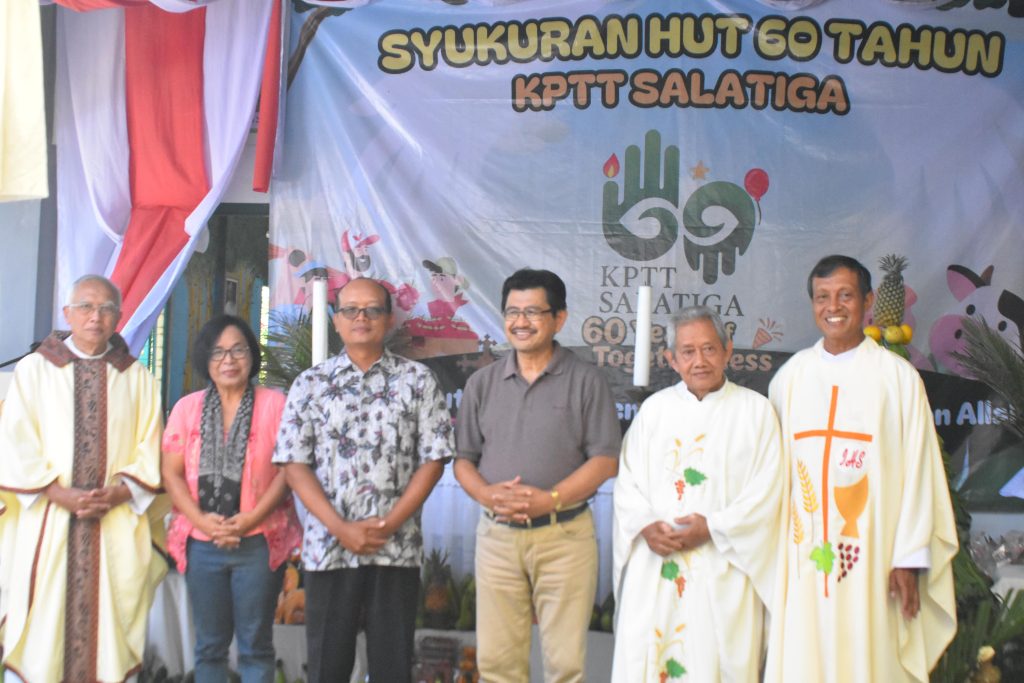
Monday, September 1, 2025, was a joyous occasion for the Agricultural Training of Salatiga (KPTT). On that day, KPTT celebrated its 60th anniversary. Some people were surprised that KPTT was still standing strong and serving the field of agriculture and animal husbandry. In fact, a former director of KPTT, Father Bentvelzen, S.J., who had served at KPTT for 25 years, was surprised that KPTT still exists today. It is a miracle.   For this 60th anniversary, KPTT chose the theme “Weaving Harmony with Nature, Fellow Human Beings, and God.” This theme emphasizes explicitly that KPTT is not just a place to learn about farming and animal husbandry, but also a place to build harmonious relationships with nature, fellow human beings, and God. The basis for this theme is the call made in the encyclical Laudato Si and the Universal Apostolic Preferences (UAP). In fact, since 2023, KPTT has established itself as a hub for learning about human ecological spirituality. The word ‘harmony’ aims to emphasize to everyone that the balance of our relationships with nature, others, and God cannot be separated. The three must be in harmony and cannot be separated from each other.   Anniversary Celebration of KPTT The anniversary celebration of KPTT is divided into three parts: a family gathering, an alumni meeting, and a final mass to mark the occasion. The family gathering is dedicated to KPTT employees and their families, as well as to students currently enrolled in courses and internships until August 30, 2025. Participants engaged in three main activities: a healthy walk, planting cloves to symbolize KPTT’s 60th anniversary, and various competitions with door prizes, all aimed at fostering family bonds. The joyful faces of participants reflected the gratitude and happiness experienced at KPTT.   The alumni meeting, held on August 31, saw a limited turnout mainly from alumni of Purwodadi, Bawen, Bandungan, Malang, and Manado. This reunion brought joy and nostalgia as alumni reminisced about their time studying at KPTT. Many expressed gratitude for the education received, whether for one year or three months, noting its strong influence on their lives. Many alumni remain active in agriculture and livestock. One representative, Mr. Teguh, shared his pride in his education at KPTT and how it has enabled him to work alongside agricultural students from Brawijaya University, as well as his active role in social and economic development in his parish.   The 60th anniversary concluded with a mass led by Father Paulus Wiryono Priyotamtama, accompanied by Fathers Petrus Sunu Hardiyanta and Fransiskus Asisi Sugiarta. The altar was decorated with fruits and vegetables harvested by KPTT. At the end of the Mass, guests were invited to take home the harvested produce as a blessing. Father Wir expressed gratitude for KPTT’s ongoing service to many, noting his past role as director and ongoing interest in KPTT’s mission.     Staring at the Future of KPTT During the anniversary of KPTT, an important event to celebrate is the change in leadership. For the past nine years, KPTT has been led by Pater F. A. Sugiarta, S. J., has made continuous progress, now serving many young people. The number of participants in various activities has significantly increased from 615 participants in 2021 to 3,956 participants in 2024.   Another key point of gratitude is KPTT’s independence. Unlike before, when it relied heavily on foreign funds, KPTT is now focused on becoming self-sufficient. To achieve this, KPTT is enhancing its production and marketing activities to secure enough funding for its operations and employees.   KPTT aims to be a leading institution for agricultural and animal husbandry education while promoting ecological spirituality and emphasizing a harmonious connection between nature, others, and God. KPTT seeks collaboration with those interested in advancing agriculture, animal husbandry, and youth development. Everyone is invited to participate in helping KPTT achieve its future goals.   Contributor: F. Antonius Dieng Karnedi, S.J.

English

Catechism Week

From Saturday to Wednesday, August 9-13, 2025, St. Stanislaus Novitiate of Girisonta held a Catechetical Week for novices and pre-novices. This annual program aims to equip the novices with catechetical knowledge obtained from the Sanata Dharma University teaching team, led by Fr. Alexander Hendra Dwi Asmara, S.J., Mr. Rudi, and Ms. Sindi, along with two final-year students, Ariel and Caroline.   Each day, the novices participated in new ice-breaking games to support their ministry activities at the Parish of Girisonta, including games such as walking together, newspaper folding, ready-aim-fire, and cooperative counting games.   In addition to these activities, the novices received lessons on the development of catechesis to guide their pastoral work towards community transformation and spiritual growth. Notably, the Sanata Dharma team not only conducted lessons but also actively participated in the environmental ministries by cycling with the novices, facing various challenges along the way, which sparked interesting discussions about their experiences.   Symbolic Catechism One activity during the program involves creating symbolic catechesis. Participants had to explain the meaning of catechesis using symbols or objects around them in groups of three. Each of the seven groups produced unique symbols.   One notable symbol came from Group Six (Lino, Fred, and Alfons), who chose moke, a traditional alcoholic beverage from Bajawa, Flores, East Nusa Tenggara. Despite concerns about using alcohol to represent something sacred, Lino interpreted catechesis as being similar to moke, a drink that can create an “addiction” to God’s love. He emphasized that catechesis should encourage people to return, not just to see the friars, but to deepen their relationship with God. This symbolic exercise helped the participants better understand catechesis, aiding in future preparations for their missionary work.   Apostolic Works: Basic Probation in the Jesuit Life In the context of apostolic activities or catechesis, novices often face various challenges within their mission environments. These challenges begin with difficult biking conditions, such as steep roads, low lighting in some areas, and the need to be cautious around larger vehicles. Another challenge is interacting with the communities they serve, particularly with groups such as children and teens, where understanding their dynamics and effective communication are essential.   An enjoyable experience took place in Sambeng, where Ariel, a facilitator, assisted nS Higa and Deva during their mission. The children were unique and somewhat challenging. Ariel had prior knowledge of Sambeng community and demonstrated how to create engaging dynamics and good communication with these groups. This experience led the novices to reflect on their previous shortcomings.   Ariel provided feedback, emphasizing the importance of perseverance and dedication in their process. Since the novices were new, building relationships with the children would take time. They were encouraged to remain enthusiastic about preparing catechetical materials, regardless of future successes or failures. They expressed gratitude for Catechesis Week, recognizing that apostolic work is a fundamental practice and an integral part of Jesuit life, which involves availability for mission anywhere.       Contributor: nS Martin, Edgar, and Higa

English

A Pilgrimage in the Footsteps of Jesuit Missionaries

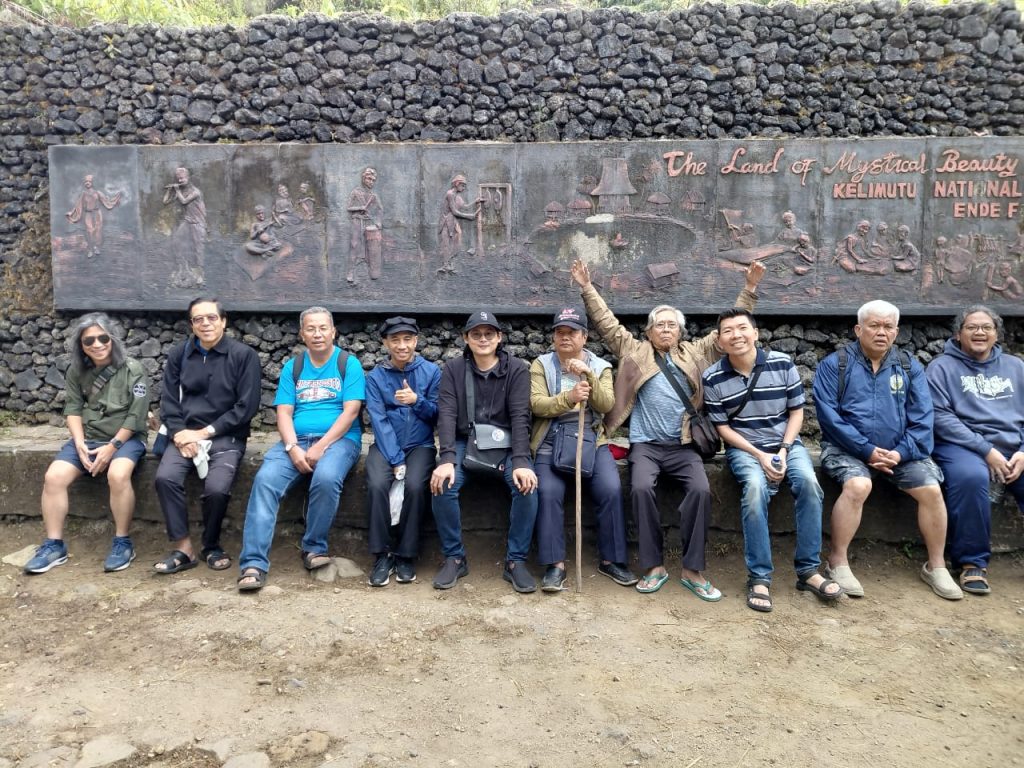
Revisiting the Faith in Flores: We felt both moved and proud when we set foot on Flores, a land that has long been a field of service full of sacrifice and love for the missionaries of the Society of Jesus. At the end of August 2025, the Beato Miguel Pro Community in Jakarta received a special gift: a spiritual journey to Ende, Maumere, and Larantuka. This trip was not just a break from the routine of Jakarta but an invitation to draw inspiration from the missionary spirit that once ignited the fire of faith in the land of Nusa Bunga. The words of Mgr. Fransiskus Kopong Kung, Bishop of Larantuka, still echoes, “The Society of Jesus began its mission in Flores, and we are always open to the Society of Jesus to help with the work here.” These simple words serve as a reminder and a mandate that the mission begun by our predecessors is now waiting to be continued.   Ende: Traces of History, Faith, and Brotherhood The journey started in Ende, a scenic coastal city rich in history related to the nation and the Church. We visited the Exile House of Bung Karno, where he reflected and wrote about his experiences of independence. Nearby, the Serambi Soekarno at the Christ the King Cathedral is where he often discussed ideas that would form the basis of Pancasila. We stood in a place where faith and nationalism are deeply connected.   Next, we entered the Christ the King Cathedral, a center of faith and a testament to the lengthy Catholic mission in Flores. The memory of Bishop Aloysius Ogihara, S.J., from Japan, who served during World War II, highlights the resilience of spiritual leaders amid challenges.   At the Diocese of Ende Palace, Father Efraim Pea warmly welcomed us, sharing stories of the Church’s service. A tall statue of the Virgin Mary stood guard over the city, symbolizing divine love. We then visited the University of Flores, a product of local leaders’ efforts since 1980, recognizing the importance of education in the Church’s mission. We also visited a traditional village, where we enjoyed local delicacies and learned how history, faith, education, and culture unite in Ende, reflecting a genuine sense of brotherhood.   Maumere: Faith that Bears Fruit in Apostolic Works From Ende, the journey continued to Maumere. The first stop was “La Storta,” the tomb of the Jesuits who have worked in the area since the 19th century. Among the simple graves, we prayed quietly, sensing that their sacrifices were not forgotten and their faith remained alive in the community.   The atmosphere shifted to one of hope at Saint Joseph Mission Workshop. This once-simple carpentry shop has turned into a skills training center for youth, collaborating with ATMI Surakarta. We witnessed young people from humble backgrounds building their futures through skills, character, and prayer. Their products, including wooden furniture, agricultural machines, coffee, chocolate, and moringa tea, are marketed under the brand Mai Sai, which translates to come here. “This name serves as a warm invitation to share hope with everyone. The message from Mgr. Edwaldus Martinus Sedu, at the opening of the automotive workshop resonated: “The Church is here not only to pray but also to empower.” We saw this message come to life in Maumere.   Next, we visited the Cristo Re Polytechnic, which prepares the youth of Flores for professional careers. A similar spirit was found at the Bunda Segala Bangsa Seminary, where the seeds of calling are nurtured in simplicity.   A touching moment in our journey was at the Old Sikka Church, the oldest Catholic church in Flores, built in 1899 by Dutch Jesuit missionary Father Joannes Engbersen, S.J. This old teak building is not just a historical site, but a living home of faith. The tradition of “Logu Senhor” every Good Friday demonstrates how faith can take root in local culture without losing its spiritual depth.   We concluded our journey in Maumere with a pilgrimage to the statue of Mary, Mother of All Nations, in Nilo, a 28-meter-tall statue on an 18-meter base atop a hill. From there, we looked over the vast city of Maumere, as if under the loving hands of Mother Mary. Nearby, we also visited the monastery and retreat house of the Passionist priests. The majestic yet tranquil atmosphere of the monastery beautifully wrapped up our journey, allowing us to reflect that every work, big or small, is always rooted in prayer.   Larantuka: The City of Reinha Rosary The journey to Larantuka, a small city in eastern Flores known as the City of Reinha Rosary, highlighted the deep faith passed down through generations. At Kapela Tuan Ana and Kapela Tuan Ma, the presence of the Christ and Mother of Sorrows statues symbolized the living faith in the Semana Santa devotion. The Good Friday procession, spanning land and sea, unites people across generations.   We had the privilege to meet Mgr. Fransiskus Kopong Kung, shared the history of the Larantuka diocese and the roots of faith dating back to the Portuguese era. At the Jesuit missionaries’ cemetery, we honored twelve priests dedicated to the people of Flores. We concluded our pilgrimage with a prayer of gratitude at the majestic Cathedral of Reinha Rosary, reflecting on our journey and enduring faith.   An End That Becomes a New Journey The pilgrimage to Ende, Maumere, and Larantuka left behind more than just spiritual memories. From the history of the struggle for faith in Ende, to the empowerment of the people in Maumere, and the loyalty to the tradition of devotion in Larantuka, we learned that true faith is always rooted in sacrifice, grows in service, and bears fruit in brotherhood. We are reminded that mission is not just a story of the past of the missionaries, but a responsibility that now rests on our shoulders to continue in accordance with the times. This pilgrimage is a reflection that God’s work is always alive in history, culture, and the simple