Pilgrims of Christ’s Mission

English

English

A Charity Drive at the Realino Jombor Learning Community

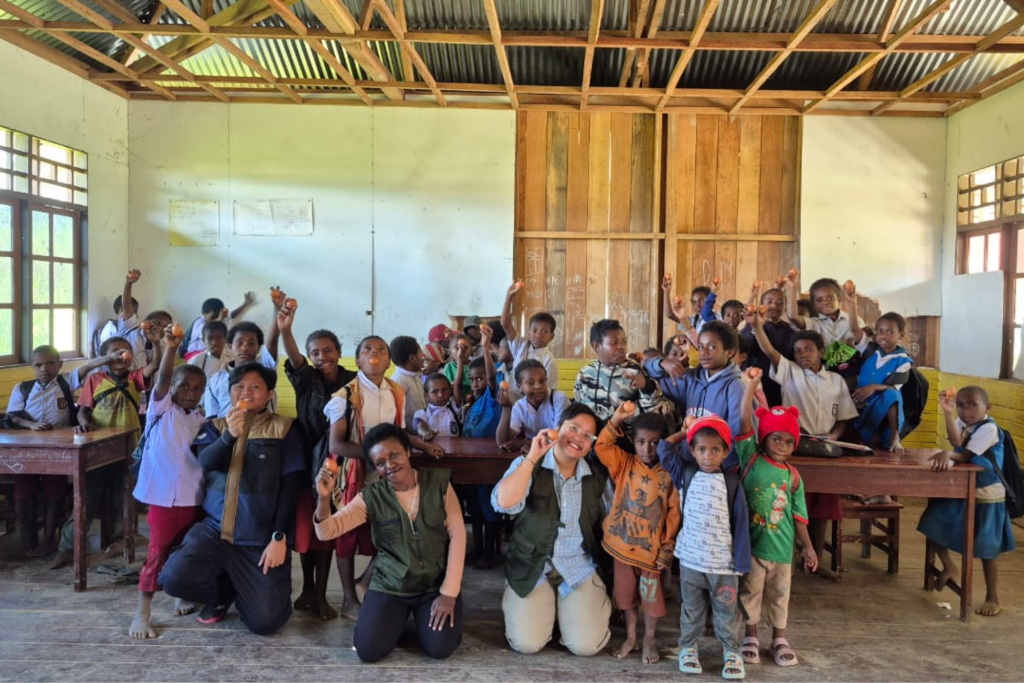
AGAPE: The experience of working with children in Jombor was joyful and meaningful for those participating in their first social service activity. They had prepared a series of events, including games and art projects, which initially started as a school assignment but turned into unforgettable moments.   Choosing a location for the social service was a challenge, and they decided on the Realino Learning Community in Jombor. They discussed which games and arts the children would enjoy and how to interact with them before the activity.     On the day of the event, September 26, 2025, the volunteers initially felt nervous. However, as they introduced themselves and created a friendly atmosphere, they began to communicate effectively with the kids. The activities aimed to foster teamwork, creativity, and a sense of closeness with the children. They played simple games like ball relay, animal guessing, and attention clapping, which brought joy and excitement. Creative activities included coloring fans for kindergarteners, painting gypsum for elementary school students, and decorating clay pots and planting seeds for older kids. Some volunteers taught basic concepts, such as colors, animals, and foreign vocabulary, while capturing memories with photos. The children’s enthusiasm made this experience enjoyable for everyone.   The most memorable moments came from direct interactions with the kids, who showed enthusiasm and curiosity despite the afternoon timing. Some volunteers faced challenges with very active children, providing valuable lessons in patience and attentive communication. Simple moments, like children proudly showing off their artwork or expressing that they would miss the volunteers, were heartwarming. A mentor’s reflection on the importance of small acts of kindness, leaving a positive impact, resonated deeply. The volunteers learned that small gestures could bring great happiness.     Initially anxious about their ability to engage with the children, the volunteers eventually felt a sense of joy and energy as they witnessed the children’s excitement. Although they experienced some fatigue, happiness dominated the atmosphere. After the activities, they felt relieved, satisfied, and grateful for a successful event, accompanied by a sense of sadness at parting from the children they had grown close to. The brief time together left a lasting impression. Through this experience, they gained valuable life lessons about patience, empathy, and the power of simple kindness, realizing that attention and listening can convey care just as much as grand gestures. They also learned to be more open, social, and confident in new situations.   Contributors: Allyn, Bianca, Cia, Echa, Ecle, Gracia, Philia, Tata, Tia, & Viola

English

Finding God in the Footsteps of Ignatius

The Jesuit Pilgrimage: “Go and do everything for the greater glory of God.” These words by Saint Ignatius Loyola inspire the Jesuit Pilgrimage in Indonesia with Rich Tour. It invites participants to deepen their relationship with God through the life of the Society of Jesus’s founder. Organized by the Society’s Development Office, this pilgrimage focuses on spiritual growth and on discovering one’s life mission.   Over 14 days, 66 Indonesian pilgrims from various cities visited significant historical sites related to Ignatian spirituality, including locations in Loyola, Manresa, Montserrat, Paris, Venice, and Rome, fostering opportunities for reflection and connection with God. All financial contributions support the education of future Jesuit priests.     Learning Humility and Finding God in Simplicity The pilgrimage starts in Barcelona and moves to Montserrat, where the group reflects on Saint Ignatius Loyola’s decision to let go of his old self. He left his sword and pride at the feet of the Virgin Mary, beginning a new life as a seeker of God. This simple act symbolizes courage and humility.   In Manresa, at the Sanctuary of the Cave of Saint Ignatius, the group feels a deep silence that leads them to think about their own struggles with worldly desires, such as the need for recognition, comfort, and fear of loss. Letting go is challenging, but in the stillness of Manresa, they sense that God is always ready to welcome those who return with sincere hearts.   The pilgrimage teaches them that being a disciple of Christ means gradually shedding the old self. They aim to carry Ignatius’s spirit into their daily lives by walking lightly, surrendering, and seeking God in everything. At the Hospital of la Magdalena in Manresa, where Ignatius cared for the sick, they learned about humility. Once a proud knight, he chose to serve with love, reminding them of their own sometimes self-serving attitudes.   The experience highlights that God often speaks in quiet moments and simple things. In Loyola, where Ignatius was born, they see how God can work through weakness. Ignatius’s transformation began in his small room, where he was healing, showing that, through pain and difficulty, God teaches us profound lessons.   The journey through Montserrat, Manresa, Loyola, and Venice becomes an inspiration to let go of ego, serve sincerely, and find God in simplicity, reminding them that every small step towards God is valuable when taken with a willing heart.   A Price That’s Worth It At first, we thought the pilgrimage was expensive, and our family and friends agreed. However, after experiencing it ourselves, we realized the price was worth it. Every visited place, prayer, and meeting made the journey valuable and unforgettable. We returned with more than just photos; we gained a peaceful heart and gratitude for the experience. We also made new friendships and even found a new family through this pilgrimage, reminding us that it was about supporting each other in faith and love, not just traveling together.     Faith that Continuously Grows This pilgrimage included Montserrat, Manresa, Loyola, Venice, Lourdes, and Rome, where we passed through the Porta Sancta and visited four holy doors. In Rome, we were amazed by the grandeur of the churches and realized how small we are in the face of the great history of faith. The magnificent basilicas were built through a long process, reminding us that God’s work requires patience and perseverance. We learned that faith might grow slowly but firmly, and we are called to be part of this great history through simple steps and hearts ready to be moulded.   Contributors: Maria Noverita and Fr. Windar Santoso, S.J.  

English

Collaborating Across Generations for Indonesia’s Design Future

WOODFEST 2025: WOODFEST 2025 marks a significant milestone for the furniture, architecture, and interior design industries in Indonesia, especially in Central Java. This is the third event, following the previous ones in 2023 and 2024. This year, it is notably held at the Marina Convention Center, having moved from PIKA Semarang campus. This shift symbolizes a readiness for growth and aims to reach a broader audience in the industry, academia, and the general public. The new venue reinforces that WOODFEST has developed into a significant public platform within the national furniture industry.   Exhibitor participation has significantly increased, with over 30 brands showcased this year, including furniture manufacturers, interior contractors, and educational institutions focused on woodworking, interior design, and architecture. WOODFEST 2025 serves not only as an exhibition but also as a space for exchanging experiences, ideas, and innovations, promoting new collaborations that are expected to continue beyond the event.     Visitor enthusiasm reflects the strong appeal of the Indonesian wood and furniture industry. Over three days, more than 2,400 visitors attended, including industry players, academics, design and architecture communities, potential buyers, and members of the public interested in furniture as a lifestyle aspect. The turnout highlights Semarang’s potential as a key meeting point for the wood and creative design industries in Indonesia.   A major achievement of WOODFEST 2025 is the collaboration between PIKA alumni, part of KAPIKA, and current SMK PIKA students. The alumni organized the event in collaboration with students, offering hands-on learning opportunities. Students not only assisted in the event’s execution but also learned about designing, managing, and running an industry event through direct interaction with exhibitors and visitors. This experience offers valuable lessons that extend beyond classroom settings, showing that WOODFEST functions as an educational medium for value transfer and professional character development.   In addition to the exhibition, thematic seminars were a highlight, featuring speakers from the fields of architecture, interior design, export industries, and global wood policy analysis. Topics included sustainable wood materials, furniture design innovations, and discussions on international regulations such as EUDR, fostering awareness of the challenges and opportunities in the Indonesian furniture market.     WOODFEST 2025 also held special significance with the attendance of Father Benedictus Hari Juliawan, S. J., representing the Provincial of the Society of Jesus in Indonesia. His presence reflects the spiritual and historical roots of PIKA, emphasizing that success stems not just from technical skills but from character development and social contributions. Ultimately, WOODFEST 2025 celebrates wooden craftsmanship and embodies the spirit of service for the greater glory of God.     The success of WOODFEST 2025 is a source of gratitude and pride. The collaboration demonstrated the strength of community and continuity across generations. WOODFEST is just the beginning of a larger journey, with aspirations for continued growth and a lasting impact on education, industry, and society.   Contributor: Johanes Chaesario Octavianus

English

The Kanisius Foundation – Wise, Secure, and Compassionate

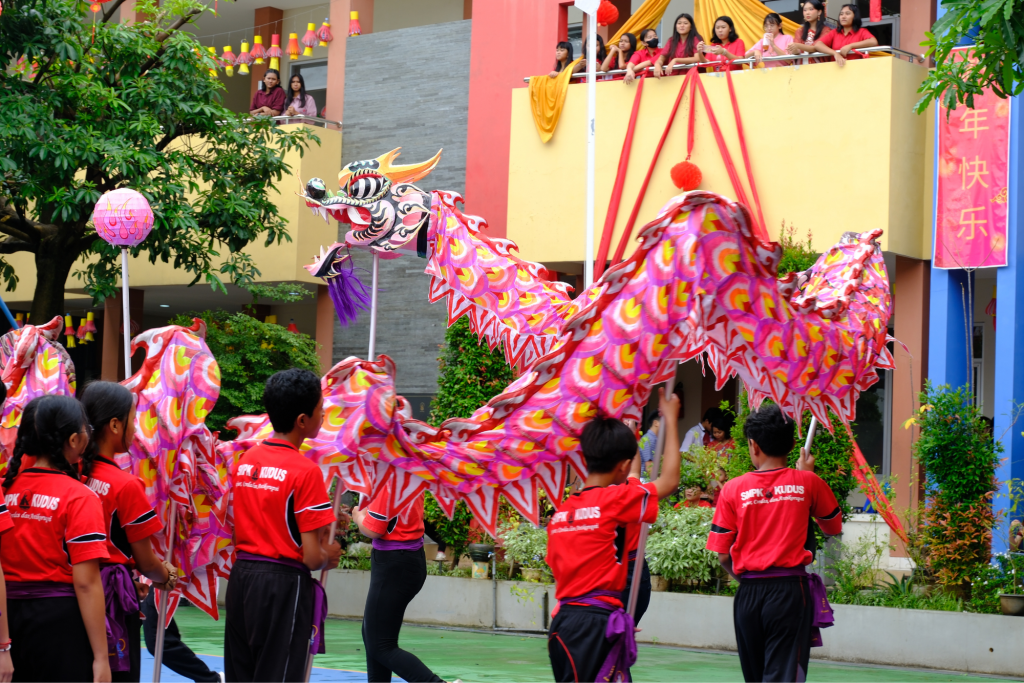
107 Years of Igniting Futures: On Tuesday, October 21, 2025, the family of Kanisius Foundation celebrated its 107th anniversary, honouring the mission started by Father van Lith, a Dutch Jesuit missionary. The event expressed gratitude for God’s presence for nearly a century. The theme “Smart, Safe, and Caring” reflects the Foundation’s future goals as it prepares for its 110th anniversary in 2028. The Eucharist celebration was held at each branch; Kanisius Yogyakarta gathered at the Immaculate Virgin Mary Catholic Church of Nanggulan, led by the Parish Priest Fr. Martinus Suharianto and Fr. Heru Hendarto, S.J. while Kanisius Semarang met at Karangpanas Parish, led by the Parish Priest Fr. Adolfus Suratmo Atmomartaya and Fr. Aria Dewanto, S.J.   Kanisius Today Currently, Kanisius Foundation oversees 186 schools, ranging from day care to senior and vocational high schools, with 1,322 teachers and employees, and 17,892 students across four branches: Semarang, Yogyakarta, Magelang, and Surakarta. At one point, the foundation, founded on October 21, 1918, educated more than 35,000 students in 350 schools in the Archdiocese of Semarang area. As it developed and faced various challenges over the past few decades, this number slowly decreased. Faced with various challenges, the Kanisius Foundation continues to improve.   Learning in this Fast-Changing World In celebration of its 107th anniversary, the Foundation supports teachers and students in acquiring new skills. On October 10, 2025, at Kurmosari Kindergarten, teachers from Kanisius Semarang and other Catholic Foundations for Education participated in the “Kanisius Study Day: Best Practices of Reflective Pedagogy Paradigm,” which included a book review of “Men and Women for Others” by Father Melkyor Pando, S. J. The event featured presentations by Yohanes Martono, the Principal of Kanisius Argotiloso Sukorejo Junior High School, and Yohana Rosana Meiwati, the Principal of Kanisius Sanjaya Sukorejo Elementary School. They discussed how personal care has fostered a supportive school environment, strengthened relationships among staff, helped students grow according to their abilities, and improved access for parents.   Father Melkyor Pando highlighted the ongoing importance of the Jesuit educational vision in today’s changing era. He emphasized the need to cultivate the 4Cs: competence, compassion, commitment, and conscience. Additionally, on October 10-11, 2025, 28 Kanisius Foundation teachers from Semarang, Surakarta, and Yogyakarta participated in a Focus Group Discussion on using AI for Deep Learning through project-based learning with Father A. P. Danang Bramasti, S.J, and Mr. T. Sarkim, Ph.D.   Ignatian Parenting and Safeguarding Kanisius Girisonta Elementary School also held an Ignatian Parenting session on Friday, October 17, 2025. Under the theme Becoming Wise Parents in the Digital Era, parents were invited to partner with the school in guiding their children amidst the challenges of the digital world, which are worrying for the development of the younger generation. Furthermore, safeguarding outreach and training have now been completed for every teacher in all branches. This ongoing outreach to children and parents is expected to make Kanisius schools a safe place for children to grow and develop, adding to the value ​​of Kanisius schools, in addition to educating a young generation that is intelligent and cares about others and their surroundings.     Golden Rings: 25 Years of Dedication The anniversary celebration at Kanisius Semarang is special this year, as four teachers are being recognized for serving for over 25 years. Kanisius Foundation of Semarang honoured these educators with gold rings for their dedication and impact. They are: Mrs. Ika Purbiantari, the principal of Kanisius Raden Patah Junior High School, promotes religious tolerance in the multicultural environment. Mrs. Tutik Supriyanti, a kindergarten teacher at Kanisius Kaliwinong, nurtures children holistically, blending Catholic values with literacy skills despite limited resources. Mr. Agustinus Suwasma connects cultural values through activities like lion dance performances during the Chinese New Year. Mr. Felix Yanik Sargunadi is acknowledged for his behind-the-scenes efforts at the Foundation’s Central Office. Mrs. Rini Kusumawati, the head of the Semarang Branch, stated that despite rising gold prices, the Foundation is committed to recognizing the loyalty and dedication of its teachers.   Be the Men and Women for Others The Chairperson of Management Board of Kanisius Foundation, Father Heru Hendarto, urged everyone to develop holistic intelligence, which includes emotional, spiritual, and skill awareness. This growth helps individuals to feel comfortable with themselves and others, encourages kindness, and fosters mutual respect. People are encouraged to care for others, for those in need, and for nature, highlighting that everyone is meant to be caring. As Kanisius Foundation celebrates its 107th anniversary, it hopes that those educated there become more grateful and loving, recognizing their work as a divine mission, ultimately producing intelligent, noble, and compassionate change agents for the world.   Contributor: Sch. Engelbertus Viktor Daki, S.J.

English

Bringing Hope to the Frontiers of Peace

Jesuit Brothers: Jesuit Brothers: The Agents of Hope Five priests were kidnapped in the early to mid-2000s in the southern part of Zamboanga City. They were Father Luciano Benedetti, Father Giuseppe Pierantoni, Father Giancarlo Bossi, Father Michael Sinnott, and Father Rolando Del Torchio. The kidnappers, Moro Islamic Liberation Front (MILF) and Abu Sayyaf, sought ransom money for their release.   Zamboanga: A Two-Face City From October 23 to 28, 2025, Brother Yohanes Sarju, S.J., and I were sent by the Provincial to attend the JCAP Jesuit Brothers Circle Meeting at the Jesuit Ateneo de Zamboanga University, the Philippines. Although some may have heard of Zamboanga City or Ateneo de Zamboanga, many are not familiar with the Jesuit work in this coastal city on Mindanao Island. This curiosity led the author to explore stories from Jesuit colleagues, local collaborators, and online profiles about Zamboanga’s history.   Zamboanga’s tidy city layout reflects its Spanish colonial style, centering around the fort dedicated to Our Lady of the Pillar. The fort, a 17th-century military site, bears witness to the colonialism and conflict of the past. Despite the city’s calm atmosphere, security protocols for the JCAP Brothers included escorts from six members of the Presidential Security Command and ten elite military personnel during their activities and visits, including a trip to Basilan Island.     Joy under a Friendly Military Escort Twelve Jesuit Brothers from JCAP felt relaxed, consoled, and joyful despite the strict security protocols surrounding them. They gathered to reflect on their calling as Jesuits, as agents of hope, accompanied by Father Ernald, S.J., the President of Ateneo de Zamboanga University. Father Ernald emphasized that Jesuits are pilgrims of hope and shared insight from John 1:14 about the Word living among us. He highlighted that being a Jesuit brother is not just a role but a religious vocation, using the Tagalog terms kuya and utol. Kuya represents responsibility and trust within a familial bond, where older members guide and support younger ones. Utol signifies kinship and shared origins, reminding everyone of their common family tree. Living out utol enhances solidarity and collaboration among communities, fostering connections and hope in the world.   Father Ernald shared his experience of a 30-Day Retreat with Brother Jim, S. J., reflecting on the first virtue of a Jesuit Brother: to accompany others in connecting with themselves, each other, and God, while being fully present. He reminded that the mission of the Church and the Society of Jesus begins with a sense of belonging, not authority, and called for a prophecy of simplicity, which brings hope. Brother Raymund Bellezza, S. J., noted the increasing inclusive role of laypersons, whether religious or non-religious, within the works of the Society of Jesus, showing that their mission charism extends beyond its traditional members.   Vocations and Collaborations? As agents of hope, we are invited to reflect by Brother Raymund Bellezza, S. J., a member of the International Commission of the Jesuit Brothers. In the mission of the Society of Jesus, more laypeople are getting involved, including those who are not Jesuit, Catholic, or even religious. The mission’s charism is not limited to Jesuits but also includes collaborators.   What distinguishes Jesuit Brothers from their outstanding lay colleagues? This question sparked our spiritual discussion. In frontier areas like Zamboanga, Jesuits serve alongside the community. Jesuit identity is about being on a mission, helping others connect with a shared heart and mind. Jesuit Brothers are sent to shepherd and support others, ensuring they do not fear, as God is with them.   In summary, Jesuits embody the virtues of “kuya” and “utol.” The difference lies in the safety and trust fostered in collaborators, encouraging them to also become shepherds alongside the Jesuits. This is not about authority but about sharing a common mission in Christ.     Cntributor: F. Nicolaus David Kristianto, S.J. – Assistant of Pastoral Care at the Church of St. Mary Mother of God in Botong, Borneo

English

The Pilgrim as Christ’s Messenger

I believe that most of the Internos readers must have heard the term General Congregations. The General Congregation is the highest decision-making body in the Society of Jesus, attended by representatives from all provinces. Since its establishment nearly 500 years ago, there have been 36 General Congregations. In addition, there is the term Meeting of Major Superiors, which the 34th General Congregation regulates. This meeting is held approximately every 6 years to discuss the Society’s conditions and issues. So far, this meeting has been held three times, most recently in Rome from October 17-26, 2025. I attended as the Provincial of the Indonesian Province of the Society of Jesus, along with 77 superiors and 30 other officials.   The theme of the meeting was “Pilgrims in Christ’s Mission,” and it addressed specific topics chosen to inform the Father General. The discussion method was carried out in stages: a presentation, followed by prayer and personal reflection, and then discussion in small groups. Important topics included collaboration with the laity, restructuring, and the role of local superiors. These changes indicated that the role of the laity was growing, but they had no voice in government. The merger of several provinces occurred due to declining numbers of Jesuits, and the universal mission was often not prioritized.   The participants also met with Pope Leo XIV, who received them warmly and reaffirmed the Society’s apostolic preferences. The Pope reminded them that the Church needed their involvement in various fields, such as geographical and spiritual, just as important as in the time of St. Ignatius.   Pope Leo XIV appeared very down-to-earth, showing relaxed body language and warm, thoughtful speech. He often referred to his experiences as a missionary and religious leader during conversations. After the meeting, the other provincials and I felt joyful, especially after taking photos with him.     The greatest blessing of this encounter was connecting with the superiors in a warm, open atmosphere, sharing experiences that brought us closer together. The General Father and his staff were fully present and engaged with participants, even inviting them to casual lunch discussions. The meeting resulted in recommendations for the General Father to consider in his policies and communications. Armed with this experience, the Society will strive to remain faithful to the mission entrusted by Christ amid a world of uncertainty.   Contributor: P Benedictus Hari Juliawan, S.J.

English

Audio-Visual Based Learning Media

A Training Session for Teachers of Kanisius Yogyakarta: From September 19 to 21, 2025, the USD Audio Visual Studio hosted a training for 20 teachers from the Yogyakarta Branch of the Kanisius Foundation. Most participants were young teachers, who attended the training at the studio and stayed at Kampoeng Media. This event was a partnership between Sanata Dharma University and the Kanisius Foundation. Ms. Nur Sukapti highlighted the importance of the training, noting that past sessions have yielded many functional learning materials. Father Yosephus Ispuroyanto Iswarahadi mentioned that the training aims to help teachers develop appealing audio-visual media for students.   The training was led by Father F.X. Murti Hadi Wijayanto, S.J., with help from other mentors. Participants learned about Montessori-style learning, cinematography, scriptwriting, production, and editing. This session was harder because participants had prior skills. Six female elementary school students from USD also helped explain Montessori equipment.     Participants formed groups to create video scripts about the Montessori model. They filmed at three locations on Fridays from 10:00 a.m. to 6:00 p.m., with mentors present. After filming, they entered the editing stage, which involved long hours, with some working until 3:30 a.m. on their films.   On the third day, participants had an appreciation and evaluation session for their videos. They screened three videos: “Feli and the Golden Beads,” “Grammar Sense Game,” and “The Fun of Learning Fractions a la Montessori.” After each screening, other groups gave feedback, the creators shared their experiences, and facilitators and tutors offered final comments. This process was necessary for hands-on learning. Everyone felt more prepared to teach after the training.   Before concluding the session, Father Iswarahadi led a Thanksgiving Mass, and Mr. Alex thanked Sanata Dharma University and tutors. Certificates were presented, leaving participants excited for their schools.     Contributor: P. Yoseph Ispuroyanto, S.J.

English

Green Spirit and Caring For The Earth

Plastic waste is often seen as a problem, but in the hands of students at St. Michael Catholic Vocational School in Surakarta, it can become an opportunity. With a passion for learning and creativity, the students have incorporated recycling into their daily lessons. This is a tangible manifestation of their commitment to caring for the earth for a more sustainable future.   Weaving Knowledge into Hope for the Earth From August 11-14, 2025, tenth-grade students at St. Mikael Vocational School participated in a lesson on the Circular Economy to learn about recycling and environmental issues. The PT ATMI IGI Recycling team explained recycling, its effects, and how to continue these practices. Students engaged actively in discussions and received key chains made from recycled bottle caps featuring their school logo as a reminder of the lesson.   Teacher Ms. Yanti asked students to collect bottle caps for two weeks. They brought in large quantities, totalling 16 kg across seven classes, highlighting the problem of plastic waste. The school collaborates with PT ATMI IGI on recycling education and has two machines for hands-on practice, allowing students to create keychains, jewellery beads, rosaries, and more.   Ignatian Spirituality to Care for the Earth Plastic recycling activities at St. Mikael Vocational School teach students the 4C values. Competence teaches mould-making techniques based on creativity. Compassion raises awareness of protecting the Earth from waste. Conscience helps students distinguish between good and bad behaviour towards the environment. Commitment is caring for nature. This activity also supports the Universal Apostolic Preferences and Sustainable Development Goals, especially in quality education and climate change action. It is hoped that this activity will be sustainable and benefit the school. Students learn about the Circular Economy and demonstrate that small steps at school can create a greener and more sustainable future.     Contributor: Fransiskus Marcelino Utama – Student of SMK Katolik St. Mikael Surakarta