

Bayu Risanto and the Jesuit Intellectual Apostolate
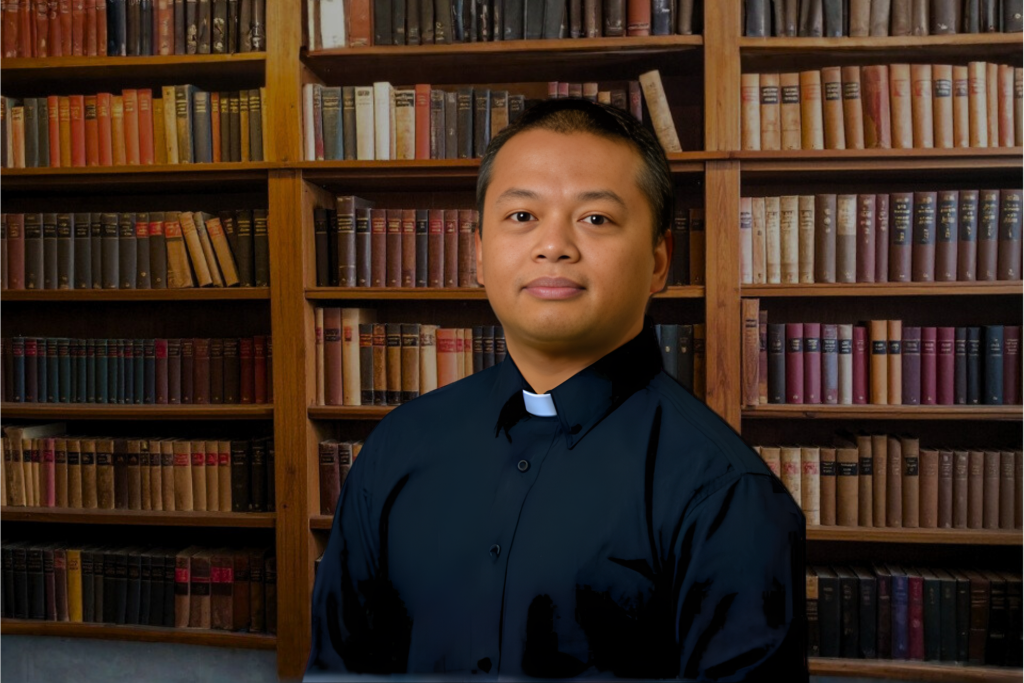
In early 2026, social media highlighted Father Bayu Risanto, an Indonesian Jesuit priest, after an asteroid was named after him. Many celebrated this achievement, especially within the Catholic community, which felt proud that a religious leader excelled in science and showed that faith and science could coexist. However, some people wondered how someone could be both a priest and a scientist. How would he serve his mission?
The text also touches on the history of science and the role of the Catholic Church, particularly the Jesuits, in it. Founded in 1540 by Ignatius Loyola, the Society of Jesus aimed to excel in all areas. Loyola envisioned a religious order that would not be limited to traditional monastic life and could perform ministries anywhere, as long as they served the greater glory of God. His writings, including the Constitutions and Spiritual Exercises, emphasized that Jesuits should seek to find God in all things.
For Jesuit graduates, these principles are integral to their identity. In the realm of science, the Jesuits have become associated with the production of knowledge, leading to phrases such as “that’s very Jesuit” or “that’s Jesuit science” being used in discussions.
The Jesuits play a significant role in the history of Western knowledge, particularly in religion and science. At the Max Planck Institute for the History of Science, many books relate to this group. Matteo Ricci, a Jesuit, greatly influenced astronomy and calculus in 16th-century China, while Athanasius Kircher contributed to the history of museums with his Wunderkammer. Despite their contributions, the Jesuits received mixed reactions from the scientific community, eliciting both admiration and resentment. An example of this tension is Maximilian Hell, a Jesuit astronomer, who faced criticism in 1769 for delays in publishing his report on the transit of Venus. Over the course of 200 years, Jesuit scholars published more than 5,000 titles across various scientific fields, including astronomy, philosophy, and cultural anthropology.
Ignatius wanted his companions and followers to engage with the world. His advisors suggested focusing on education and overseas missions to understand people’s needs and aspirations. The main goal remained confession-building, aimed at converting people to Catholicism, especially during the Counter-Reformation. Steven J. Harris describes this as a classy way of proselytizing. In his 1996 work, he examined how the Jesuits utilized science to advance their religious mission.
The connection between education and overseas missions lies in long-distance networks, a concept first proposed by the social scientists Bruno Latour and John Law. This approach led to the development of learned ministries, scientific-oriented missions targeting three groups: studiosi (young people in Jesuit schools), virtuosi, and cognoscenti. Studiosi included both laypeople and clergy attending Jesuit schools, such as seminaries and universities.

Virtuosi were noble patrons who collected antiques and were interested in the new sciences, while cognoscenti referred to the educated class, including writers and readers, much like today’s academic community. The Jesuits recognized these groups as clients and created publications for them.
Ignatius’ followers understood the desire for new knowledge among virtuosos and cognoscenti, and the Jesuits aimed to fulfill that need. Ignatius believed in nurturing positive curiosity and encouraged his followers to strengthen ties with high-quality individuals. Missionaries in places like India and South America were asked to send various information, including travel notes and cultural observations. In his letter to Gaspar Berze, Jesuit Superior in Goa, dated February 24, 1554, Ignatius wrote,
“…They want to know, for instance, how long the days of summer and of winter are; when summer begins; whether the shadows move towards the left or towards the right. Finally, if there are things that may seem extraordinary, let them be noted, for instance, details about animals and plants that are either not known at all, or not of such a size…
Missionaries sent information, which was processed, leading to new writings and more missionaries being sent. This process not only made the Jesuits an efficient organization but also enabled them to gather extensive knowledge. Jesuit scholars shared their work with patrons, who were expected to continue funding the missions.
Latour and Law identify three key elements for successful long-distance networks: equipment, dedicated individuals (such as the Jesuits, motivated by their faith), and documentation. The Jesuits’ strong faith helped them create important scientific records that supported their religious missions and satisfied their patrons. During the 16th–17th centuries, as imperialism and colonialism were emerging, European enterprises developed systems to manage overseas territories. In this setting, the Jesuit mission stood out as an early effective operator of long-distance connections, despite not being a formal state or kingdom. Harris concludes that the Jesuits used nature, in the context of science, as part of their mission strategy, making science a key element in their evangelistic efforts from the outset.
Congratulations, Fr. Bayu Risanto! Ad Maiorem Dei Gloriam!
Source:
Feingold, Mordechai, ed. Jesuit science and the republic of letters. MIT Press, 2003.
Harris, Steven J. “Confession-building, long-distance networks, and the organization of Jesuit science.” Early Science and Medicine 1.3 (1996): 287–318.
O’Malley, John W. Saints or devils incarnate: Studies in Jesuit history. Vol. 1. Brill, 2013.
Contributor: Dwirahmi Suryandari – PhD Candidate, Max Planck Institute for the History of Science, Berlin